Feeling fine is not the same as being fine. Fluid can build for days before it turns into breathlessness or a swollen ankle. The study that measured this used implanted monitors, so there was an objective number to check the feeling against.
Hearts+
SAHRA is a self care companion for adults managing heart failure at home. Hearts+ connects your devices, keeps the record, carries the conversation on your phone, in a browser, over text message or on a plain phone call, and runs the checks that happen while you are asleep. She reads what it gathers, works out what matters, and answers you in plain language. Hearts+ does the work. SAHRA decides what is worth saying.

 Hearts+
The platform. It connects the devices, keeps the record, schedules what is due, and runs the checks while you are asleep.
The assistant. She reads all of it together, works out what matters, and decides what is worth saying.
Feeling fine is not the same as being fine. In one study of patients with implanted monitors, 44 percent misjudged their own fluid status, in both directions.1 Some felt well while they were congested. Others felt waterlogged while they were objectively dry.
Fluid is only one part of it. What decides how the months after a discharge go is spread across your weight, your blood pressure, the medicines, the salt in your food, how much you are moving and how you are sleeping. No single one of those tells you the whole story. Daily weight, the advice almost everyone is given at discharge, catches about 23 percent of congestion on its own.
Feeling fine is not the same as being fine. Fluid can build for days before it turns into breathlessness or a swollen ankle. The study that measured this used implanted monitors, so there was an objective number to check the feeling against.
Noticing is only half of it. Symptom perception has two steps: detecting a change in your body, and working out that the change belongs to heart failure. SAHRA asks about both, because a symptom nobody names never gets acted on.
23%
how much daily weight alone catches
Riegel et al., 2018
The scale is honest and incomplete. Weighing yourself every morning is still worth doing, and it is the advice almost everyone is given at discharge. On its own it catches about a quarter of what is happening.
Shoes, rings, pillows. The questions that find fluid early are domestic ones. Are the shoes tighter, does the ring still turn, how many pillows did it take last night. SAHRA asks those before she asks anything clinical.

An ordinary morning at home. Nothing about a day like this looks like the week before an admission, and that is the difficulty. Feeling well is not evidence of being well, so the answer cannot be to wait until something feels wrong.
7.7 million
American adults aged 20 and over living with heart failure, in survey data for 2021 to 2023.2
6.7 million
The estimate for 2017 to 2020. The number of people this concerns is growing.2
1 in 33
American adults is living with heart failure. That is the same 7.7 million, set against the adult population.2
44 percent of patients with implanted monitors misjudged their own fluid status, in both directions.1
Riegel et al., 2018, a mixed methods study of symptom perception in patients with chronic heart failure. This is the finding Hearts+ exists to answer. The three figures above it are from the American Heart Association's 2026 statistics update.
Hearts+ answers this by not relying on any single signal.
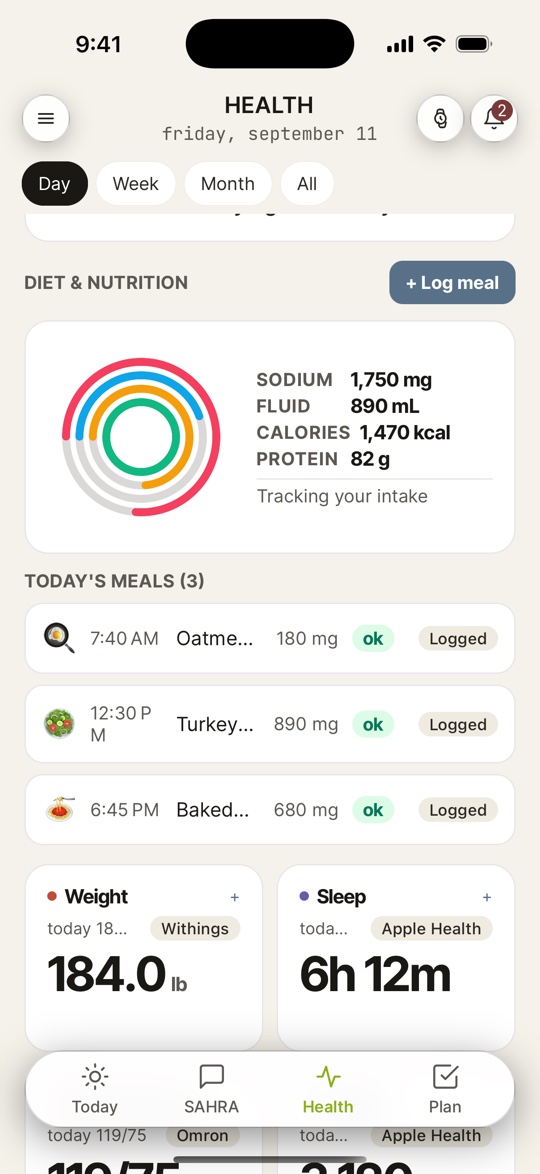
It gathers the weight, the blood pressure, the heart rate, the sleep, the medicines, the meals and the conditions around you, and SAHRA reads them together and against your own plan. A morning that looks ordinary on the scale can still be the morning she asks about your shoes and your rings.
Hearts+ gathers everything: the weight, the blood pressure, the sleep, the medicines, the meals, the conditions around you. SAHRA reads it against the care plan your hospital sent you home with. If something looks wrong she picks it up that day. If it is drifting she sees that too, and speaks first when it is worth saying.
She starts the conversation, and you can start it too, and ask her anything at any hour. What she is working towards is habits, and as those settle there is less that needs saying, so she says less.7 She is watching the whole time either way, and when something needs more than her, she gets you help.
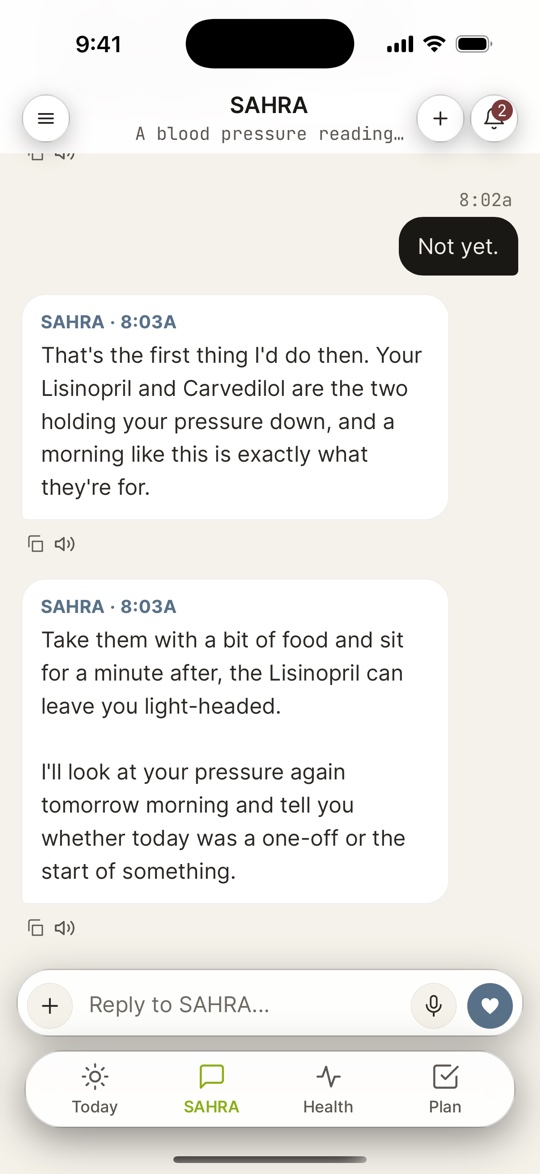
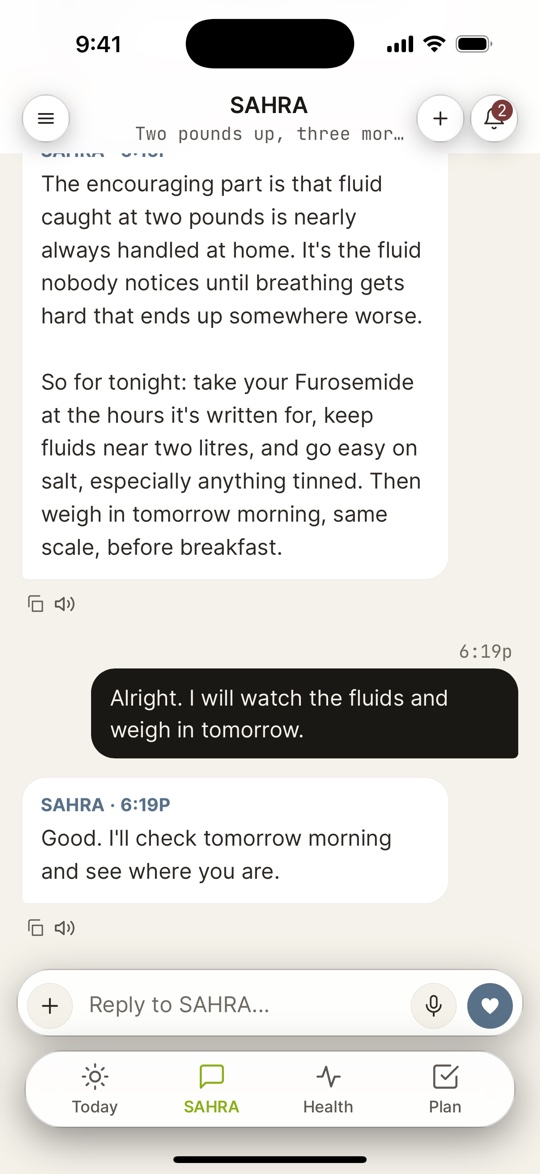
She reads the moment. One reading, read against the plan your own hospital wrote. Blood pressure spiking, oxygen dropping, a resting heart rate that has climbed. Those are caught the morning they happen, not three days later.
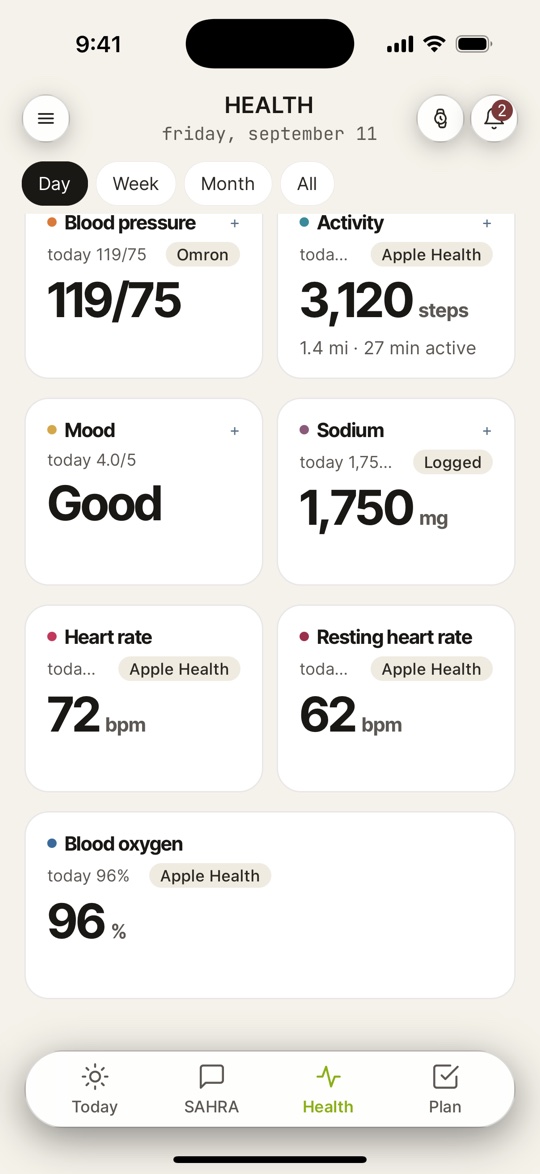
She reads the pattern. Weight drifting up across three mornings. Sodium creeping through the week. Activity falling away. None of those shows up in a single reading, and all of them matter.

One conversation, not four. Answer her by text message in the morning and pick it up in the app that evening, and she carries on from where you left off. Nothing has to be said twice because you picked up a different device.
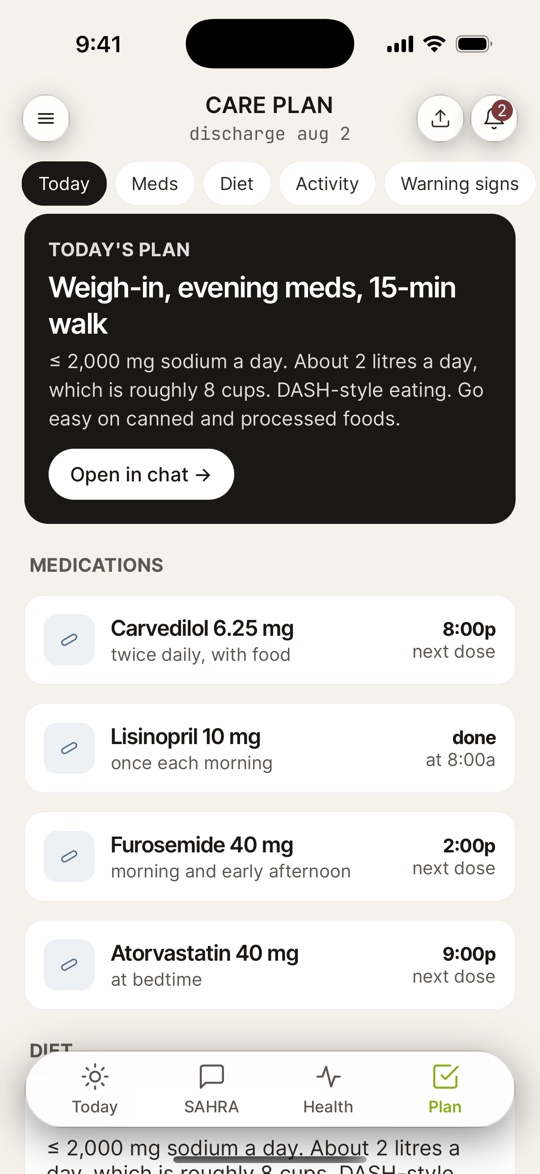
She knows what the record holds. The plan your hospital sent you home with is the thing everything else runs on, down to the salt limit and the hour each dose is due. She reads it alongside what Hearts+ has written down, so a missed evening dose or a refill about to run out is something she notices rather than something you have to report.
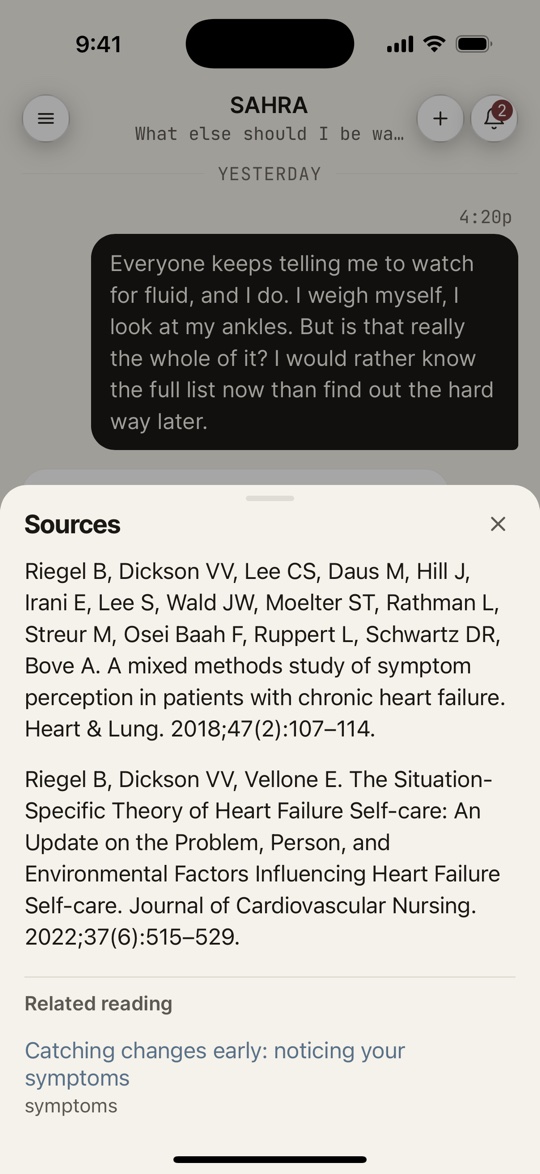
She shows her sources. Every clinical answer she gives is drawn from the research and cited, every time. Open the sources on any reply and the papers are there, named in full, so you can go and read them yourself.
One week, one thread.
Opening. A short note from her at the start of the week.
Session. A conversation about it, in your own words.
Reflection. One question at the end.
She teaches, a week at a time. The self care programme is not a course you sit down to. It is one thread a week with her, and it moves at the pace of the calendar rather than chasing you to finish.
She works on one condition, and every clinical answer she gives is retrieved from the published research on heart failure self care, with the citation attached. What sits between staying out of hospital and living well is habits. Weighing in the morning. The medicines that are easy to skip. The salt hiding in food that does not taste salty. Moving a little. Noticing early, while there is still time to do something small. SAHRA is there for that part, so that looking after yourself and getting on with your life stop being two different jobs.
Daily weight catches about 23 percent of congestion. Measured from inside the chest, the same events show up about 76 percent of the time.1
SAHRA does not diagnose, prescribe, or replace your clinical team. She helps you follow the plan they gave you.
Not everyone has a new phone, reliable data, or steady hands. The ambition is everyone rather than most people: Hearts+ and SAHRA are built to reach you whatever you own and however you are able to use it. A text message works on any phone. There is no app to install, no data plan needed, and it does not have to be a smartphone. Somebody with a fifteen year old handset gets the same assistant, the same memory and the same plan as somebody with a new one, and somebody who cannot use a screen at all can do the whole thing by voice on a plain phone call.
None of the four is a fallback. Text messages and the phone line are not thinner versions of the app: they carry the same assistant, reading the same record and the same plan. This part of the work is deliberately unfinished, and the test that decides what gets built next is a plain one. Every new capability is judged by whether it works for the person with the least, not the person with the most.
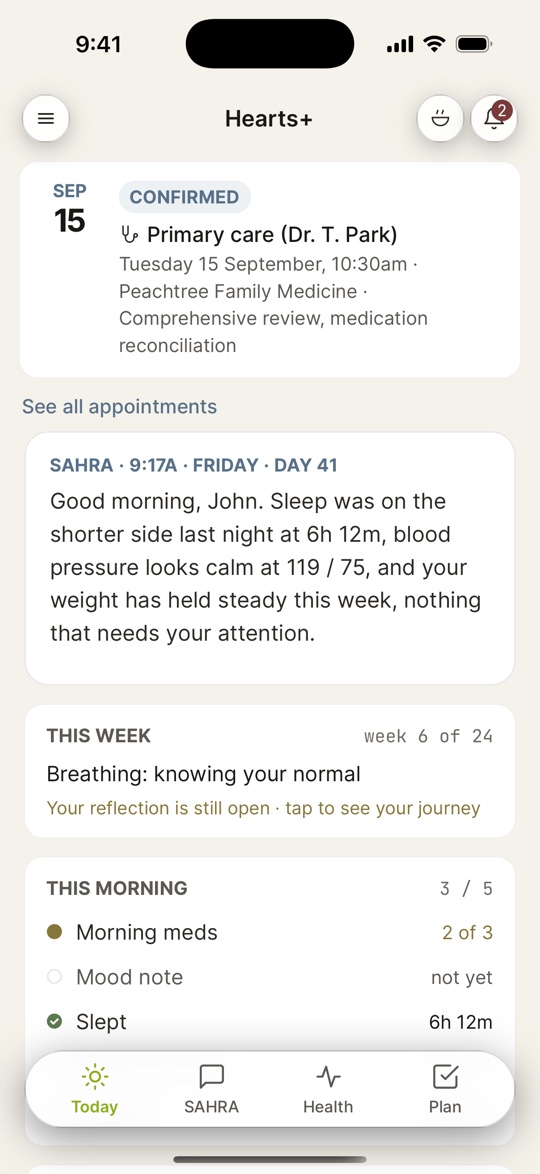
iOS and Android. Photograph a meal, record a dose, read the day's summary. The morning briefing is written at five, before you are up.

Web, in any browser. The full picture on a bigger screen, which is what a family member helping out usually wants.
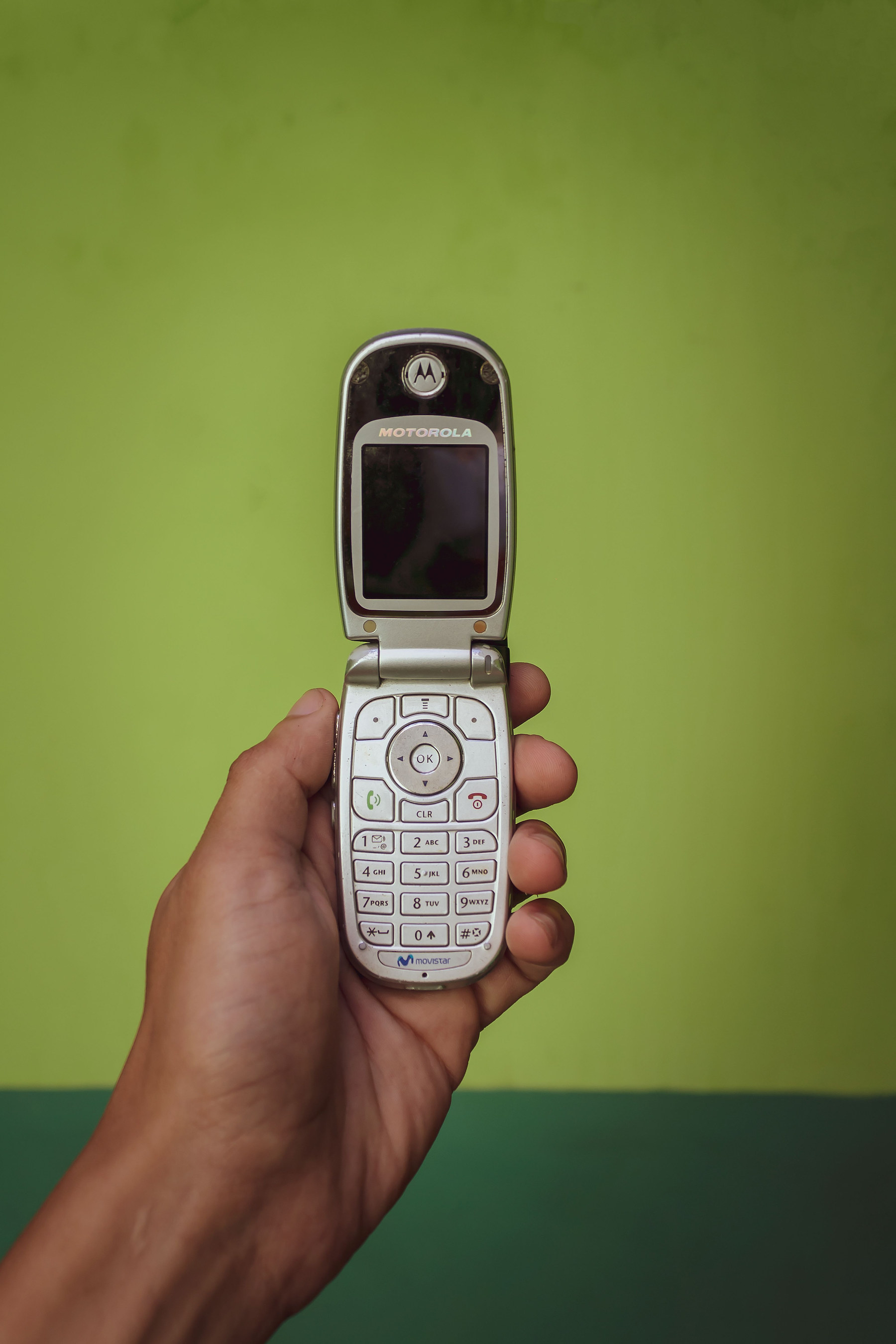
Text message. On a smartphone, on a flip phone, or on any old handset that can send a text. No app to install, no data plan, and it does not have to be a smartphone. The morning message asks whether you have weighed yourself, with 1 for yes and 2 for not yet. Reply 1, send the number the scale gave, and she records it and tells you it is up two pounds since Friday. Every message offers numbered choices, so replying is always a single digit.

Phone call. On any handset. SAHRA calls, or you call her. Speak normally, or press the number. If the call drops, it resumes at the exact question you were on.
The same message from SAHRA, however you choose to hear it, and the same account and the same memory whichever way you reach her. On a text message and on a call she never tries to work out what a free typed answer meant, which is why the choices are always numbered.
Hearts+ is not a place you go. It runs the checks overnight and between visits, and when SAHRA decides there is something worth saying, Hearts+ delivers it on whichever of the four you use. When she decides there is not, nobody hears anything at all.
Hearts+ adapts to how you need to read it, hear it and hold it. Most of that is already on when you arrive, and none of it has to be found before any of this works.
The size you pick in Hearts+ sits on top of the size already set on the phone, so the two work together rather than fighting each other.
Two pounds up, three days running.
Two pounds up, three days running.
Two pounds up, three days running.
You can have any of the colours this page moves through. What you choose on the phone is what you get in the browser.
Set it once and the spoken voice follows, so a call does not switch back to English halfway through.
It is asked for when health information is being read. Logging a weight or a dose never asks for it, and an urgent message is never held behind it.
Reduced motion is honoured on both platforms, and on this page. If your system asks for less movement, the hero stops on its first colour and nothing else moves either. Every control carries a screen reader label, and haptics are a setting you can turn off.
Hearts+ is being built to WCAG 2.2 Level AA, the level health systems ask for and the one United States accessibility law is read against.
The day is built from your own plan, not from a template. Everything in it comes from the paperwork your hospital sent you home with, and the targets are yours. The moments are ordinary: a scale before breakfast, the pill that is easy to forget, a photograph of lunch. At the end SAHRA reads the day back and says anything worth adjusting.
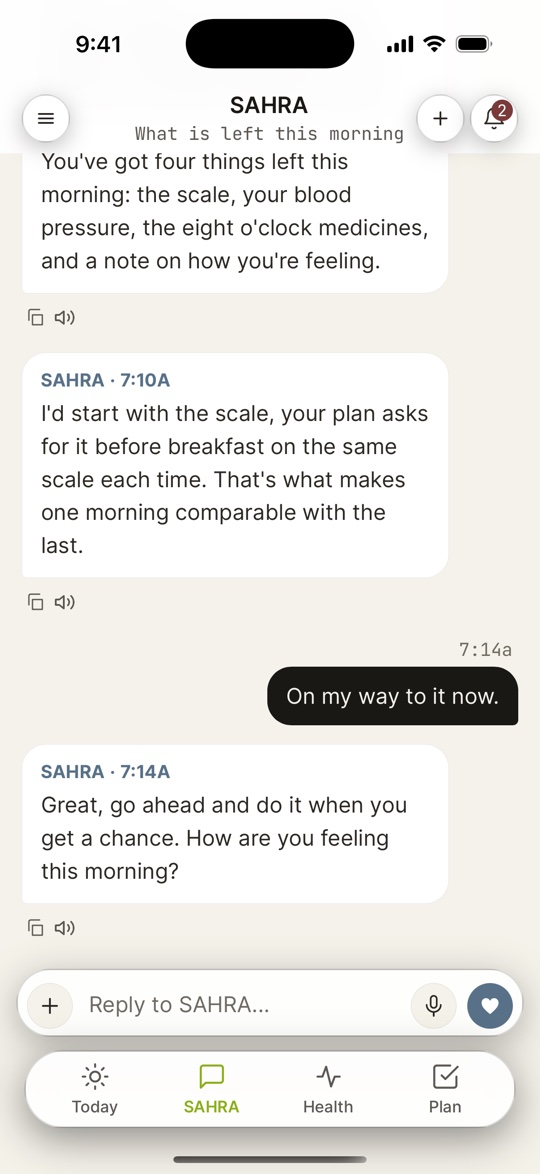
Morning. She asks for the checklist. How you slept, your blood pressure, the morning medicines, the weigh in before breakfast, and a note on how you are feeling. It is the same short list that sits on the Today screen, and it is the one your own plan asks for rather than a standard set.
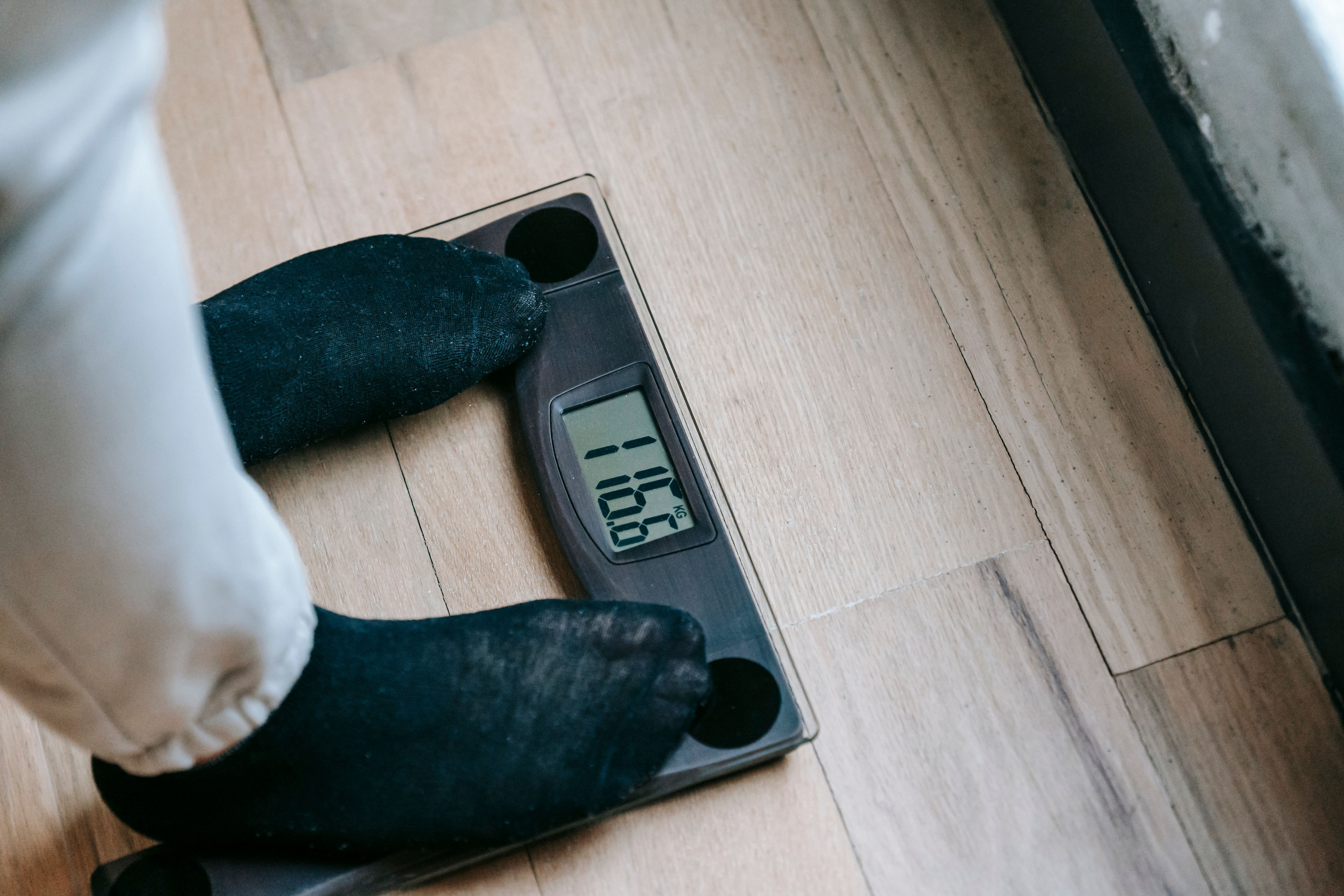
Morning. Step on the scale before breakfast. The number lands in Hearts+ on its own, from a connected scale or from the phone's own health store. You can also type it in.
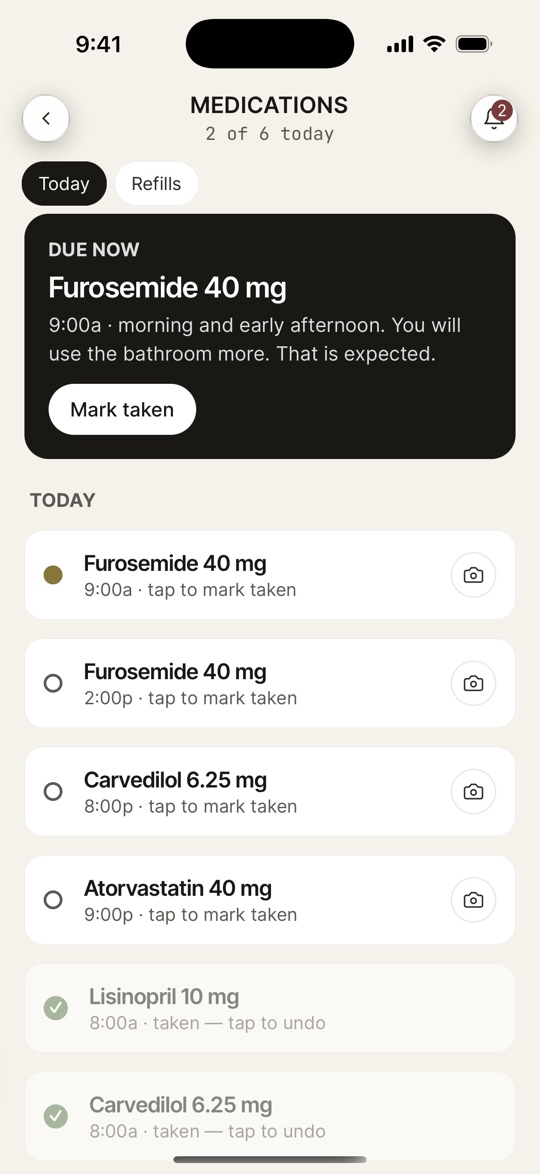
Mid morning. A reminder for the pills that are easy to forget. Not the ones you never miss. Mark a dose as taken, or record yourself taking it and let Hearts+ check the recording. Verified doses carry a small camera mark.
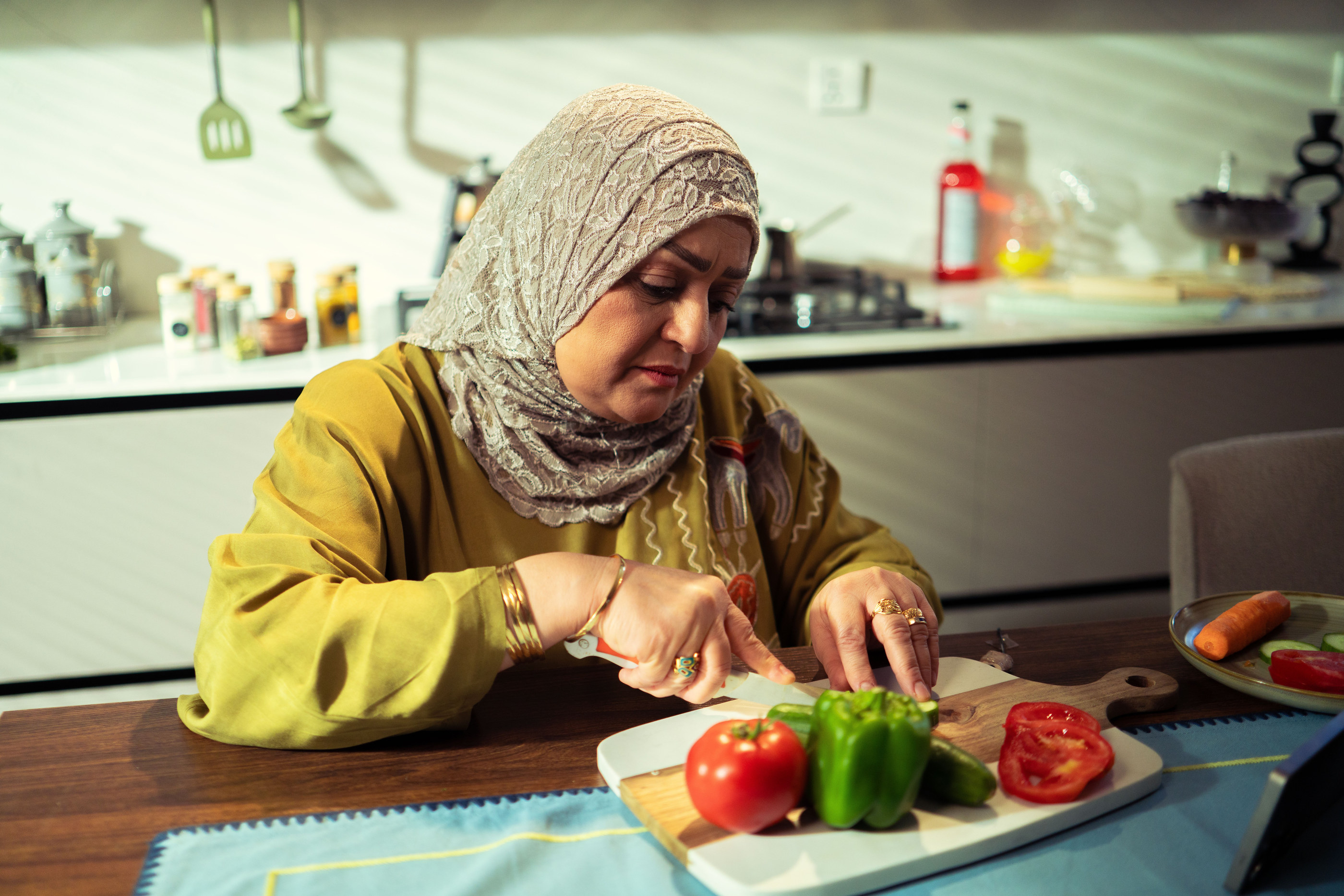
Lunch. Photograph the plate. Hearts+ works out the sodium without you reading a label, and records the rest of the nutrients at the same time.
Today around you
62°
Cloudy, light wind
Air quality, poor
Today might be a good day to do the walking indoors.
Weather is not health information, so this is the one card that can travel with a notification.
Afternoon. Air quality is poor today. Hearts+ reads the air quality where you live, and SAHRA suggests the walk happens indoors. Location comes from an address you typed, and nothing is tracked in the background.5
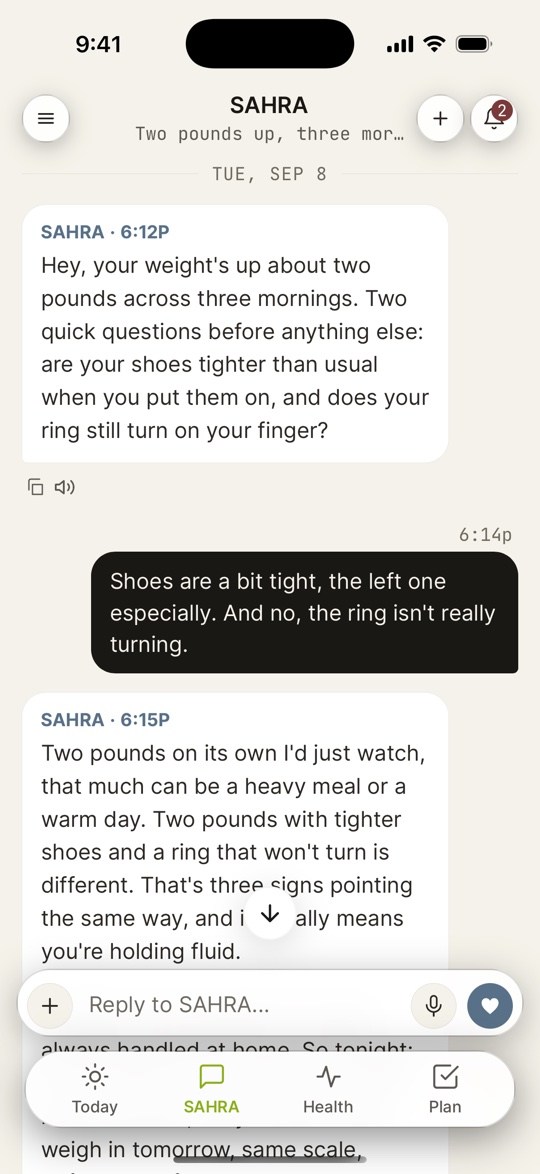
Evening. Two pounds up, three days running. SAHRA asks about the shoes and the rings first, then reads back the step your own clinical team wrote for exactly this.
She has read the day.
There is nothing she needs to tell you tonight, so she leaves you to your evening.
Night. She reads the day, then decides there is nothing to say. Most evenings go like that. There is no streak to keep, no badge to collect, and nothing to open before bed.
84.7 percent of patients kept to their diuretic regimen in the three months after a hospital discharge.3
Hearts+ identifies the food, estimates the portion, and records 14 nutrients against United States Department of Agriculture data. You can correct any item and the totals recalculate. It never reads a label for you.
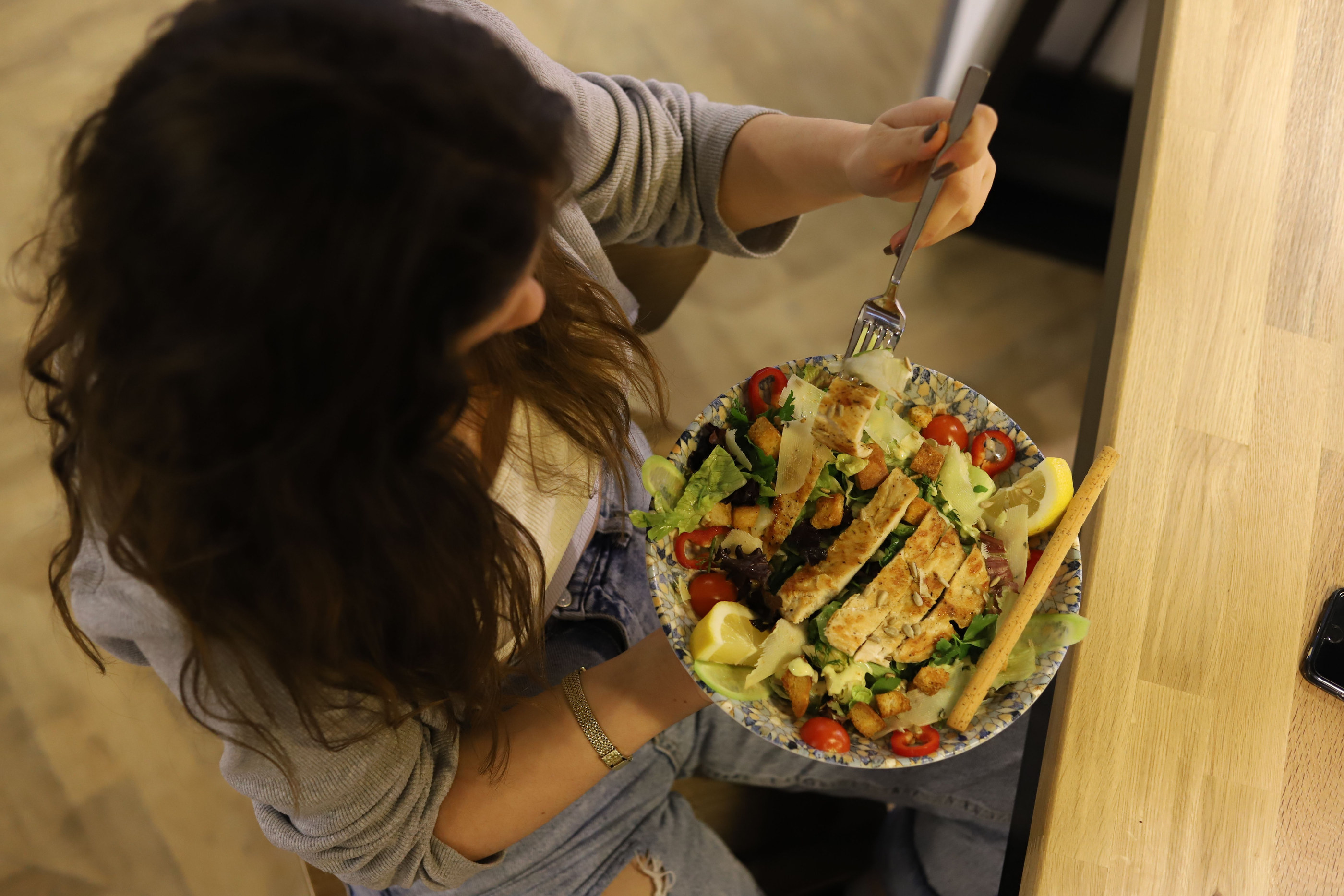
Point the camera at the plate. One photograph, taken before you eat. Hearts+ identifies each item and estimates the portion from the picture.
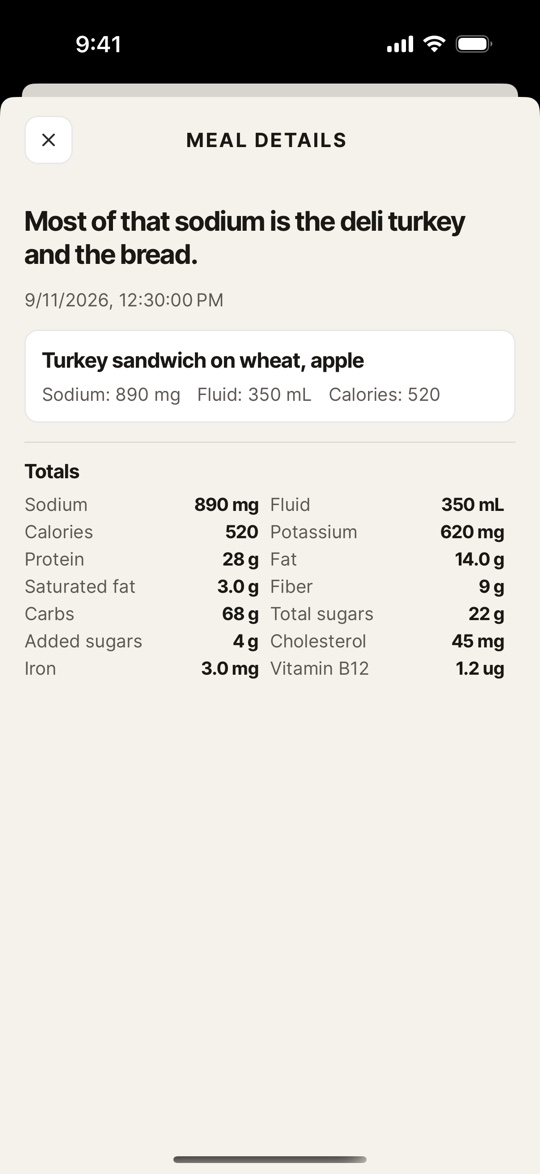
Fourteen nutrients from one photograph. Sodium, potassium, fluid, energy, protein, fat, saturated fat, fibre, carbohydrate, total sugars, added sugars, cholesterol, iron and vitamin B12.
Sodium, today
1,490 mg recorded so far. Your plan does not set a daily ceiling, so this is a record, not a score.
Sodium adds up across the day. If the plan your clinical team wrote sets a daily ceiling, the day is measured against it. If it does not, the number is simply recorded and shown to you.
It never reads a label for you.
Hearts+ works from the food on the plate and the United States Department of Agriculture data behind it. Pointing the camera at a packet is not what it does.
Food, not packaging. This is a deliberate limit. Reading a nutrition panel off a photograph is a different job, done less reliably, and Hearts+ does not pretend to do it.
42.4 percent kept to a low sodium diet over the same three months. It is the hardest of the three habits, and the first one people drop.3
A dose can be marked as taken with a tap, and it can also be recorded. Point the camera at yourself and take the pill, and Hearts+ records that the dose went down. If the recording is not clear enough to tell, it says so, and you mark the dose by hand as you always could. It is the same idea as photographing a plate, pointed at the part of the plan that is easiest to lose track of.
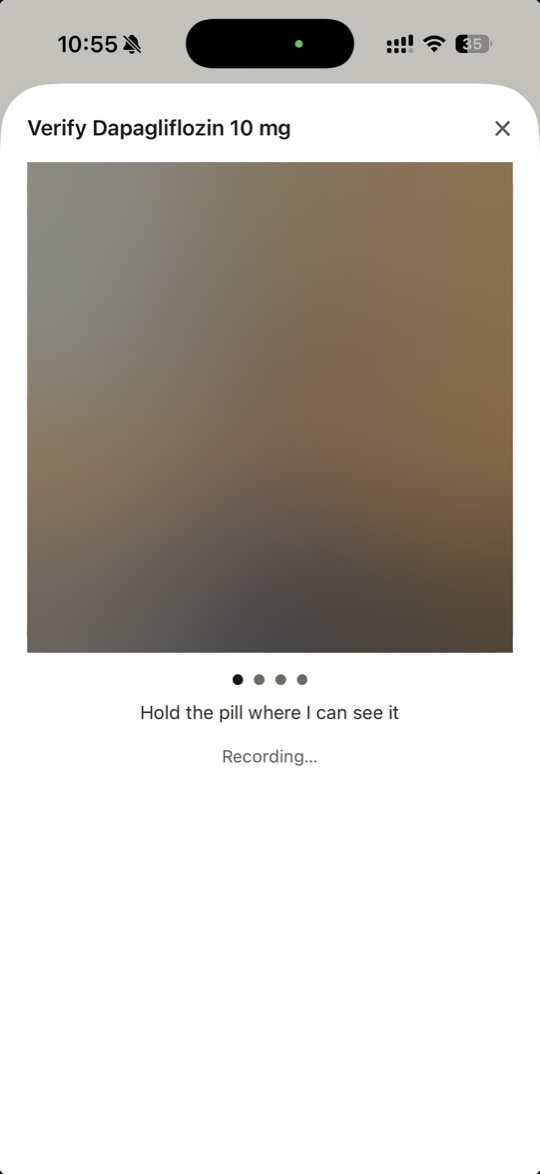
One short recording, on the dose that is due. It happens where you already are, on the pill you are already taking, rather than as a separate chore.
Two ways to mark a dose
Neither one counts for more than the other.
Nothing here can come back as a mark against you. If a recording is not clear enough to tell, that is a comment on the picture and never on you, and you mark the dose by hand as you always could.
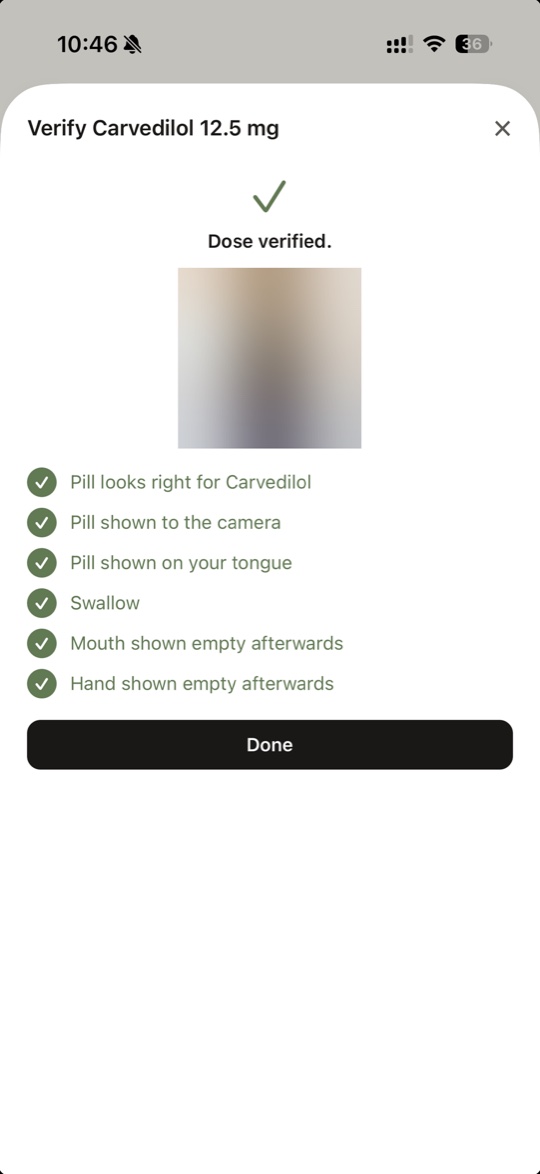
A recorded dose carries a small camera mark. It sits beside the dose in your schedule and in what your clinic reads, so the record holds not only that a dose was marked but how it was marked.
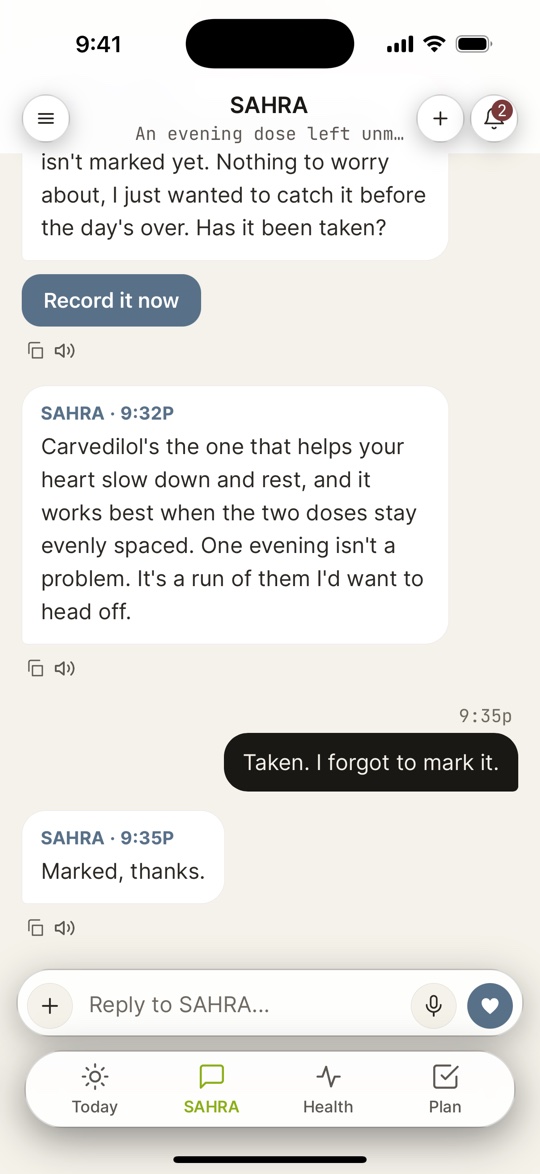
If a dose is not marked, Hearts+ looks again. It checks again later, and then SAHRA asks. Medicines you take only as needed are never chased at all, because there is nothing to be late for.
It is a record, not a test.
Nobody is scored on a recording. It is there so the dose you took is on the record as taken, and so you and your clinic are reading the same thing.
Help, rather than surveillance. Recording a dose is one way to mark it and never the only way. A dose you mark with a tap is recorded exactly the same, and nothing about your schedule changes if you never record one.
The camera is one way to mark a dose, and the schedule reads the same either way. The medicines on it are the ones from the plan your hospital sent you home with, each one confirmed by you before anything was scheduled.
This is here so that you and your clinic can both trust the record, not to catch anybody out.
A day with heart failure is full of things to remember, and Hearts+ holds them so that you do not have to. Not a filing job you have to keep up with, but a record that fills itself in while you get on with the day.
What is due, what you have done, and what she has noticed.10
One conversation, on any of the four ways in, that carries on from the last one.12
The paperwork you came home with becomes the thing everything else runs on.11
Doses and meals, recorded without much effort.
The ones you chose, and your clinic, seeing only what they should.
Nothing new to buy, and nothing to set up twice. Hearts+ reads the systems and the devices people already own.
Paired once in the app, then readings arrive as the phone collects them.
Connected once, then the readings arrive with no phone in the middle.
If it writes into the phone's health store, it is here already.
More devices are added as the work goes on.
Invite a family member or a friend, by text message or by email. The people you invite get a read only view and can see how you are doing. They will hear about anything unexpected, and anything SAHRA thinks they should know about.8

Invite the people you choose. By text message or by email, and you can remove them at any time. Nobody is added on your behalf. What they get is read only, from start to finish: there is no way for a family member to log a weight, answer for you, or change your plan.
Four levels of concern
This is not a risk score and it is not a diagnosis.
Only the top two levels reach anyone. Levels one and two are recorded and sent to nobody at all. Every level is recorded either way, so nothing is lost by staying quiet.

Your clinic is on the team too. The doctors and nurses who look after you, and the hospital that discharged you, sit alongside the people you invited. They see what they need to, and the plan they wrote is the one Hearts+ runs on.
The recap reaches you first.
Nothing goes to a family member that you have not already seen, and nothing goes to anyone at all below level three.
You are the first reader, always. Hearts+ is a platform for your own self care, not a monitoring service pointed at you by somebody else.
Hearts+ shows a clinic how its patients are actually doing between visits. A clinic adds its own patients to its Hearts+ account, whether they use the app or only text and call. SAHRA reads what comes in from all of them and raises the ones she is concerned about. She does not tell the team what to do. A clinician reads what she raised and decides.
When the team wants to reach somebody, a clinician can start a written conversation from inside Hearts+, and the patient is told there is a message and answers in the app or in a browser. For a patient who only uses text messages and calls, Hearts+ offers their phone number instead, so the patient hears from a real person when it matters.
SAHRA reads what comes in between visits and brings forward the patients she is concerned about. A steady week never comes up.
She says what she saw and why it worried her. SAHRA raises it, the clinician decides what happens next.
A written conversation, and appointments booked in the same place.
The months between visits are recorded rather than reconstructed from memory.
A full walkthrough of the clinic view is available on request.
What a clinic reads is how the patient is doing day to day, and the readings behind it. What the patient said to SAHRA stays between the two of them.
49.1 percent of patients were rehospitalised within six months of a heart failure hospitalisation.4
Hearts+ gathers what is happening, day and night, from your devices and from you.
SAHRA reads it against the plan your hospital sent you home with, and speaks when it matters.
When it needs more than her, the people you chose and your clinic already know.
The aim is for you to look after yourself well, and for life with heart failure to be easier.
Your information is yours. It is your own record of your own health, held so that you, and the people you chose, can use it.
You can have it deleted. If you ask to be removed, your data goes. Consent and access records are kept, because the law requires it.
It is encrypted, in transit and at rest. Encrypted while it travels, and encrypted where it is kept.
It was built this way from the start. Not added afterwards. Every service that touches health information works under a signed agreement to protect it.9
Read the privacy policy for the detail behind all four.
Your health information is yours. It is encrypted in transit and at rest, it never leaves covered infrastructure, and if you ask to be removed, your data goes.
Text size and colour that sit on top of what the phone is already set to, honoured reduced motion, screen reader labels throughout, and a text message service that works on any phone, with no app and no data plan. SAHRA speaks the language you choose.
SAHRA is a heart failure self care companion. She does not diagnose, prescribe, or treat, and Hearts+ is not a medical device.

Hearts+ is a self care platform for adults managing heart failure at home. We are running a research pilot on it. Enrollment in that pilot is by invitation and there is no public sign up yet. If you are a clinician, a researcher, or a health system and would like to learn more, get in touch.
Patients and clinic staff already enrolled sign in from here.
Photographs are stock photographs of models. They are not patients, and no person shown is enrolled in the study. Every interface shown is a rendering of the Hearts+ product, and the numbers inside those renderings are examples rather than readings from a real person.
Photographs from Pexels by Annushka Ahuja, Andres Ayrton, Arturo Añez, David Kwewum, khezez, Mushfiqur Rahman, Mustafa Erdag, Ono Kosuki and RDNE Stock project.